
Spain’s AEMPS authorises Nivaria Tech’s first medical cannabis cultivation in Tenerife, combining farming, processing and pharmaceutical manufacturing.

Spain’s Agency for Medicines and Medical Devices has authorised the Canary Islands’ first medical cannabis cultivation project, with Nivaria Tech planning up to six annual harvests at an integrated facility in Tenerife.
Spain’s AEMPS approves a first for the Canary Islands
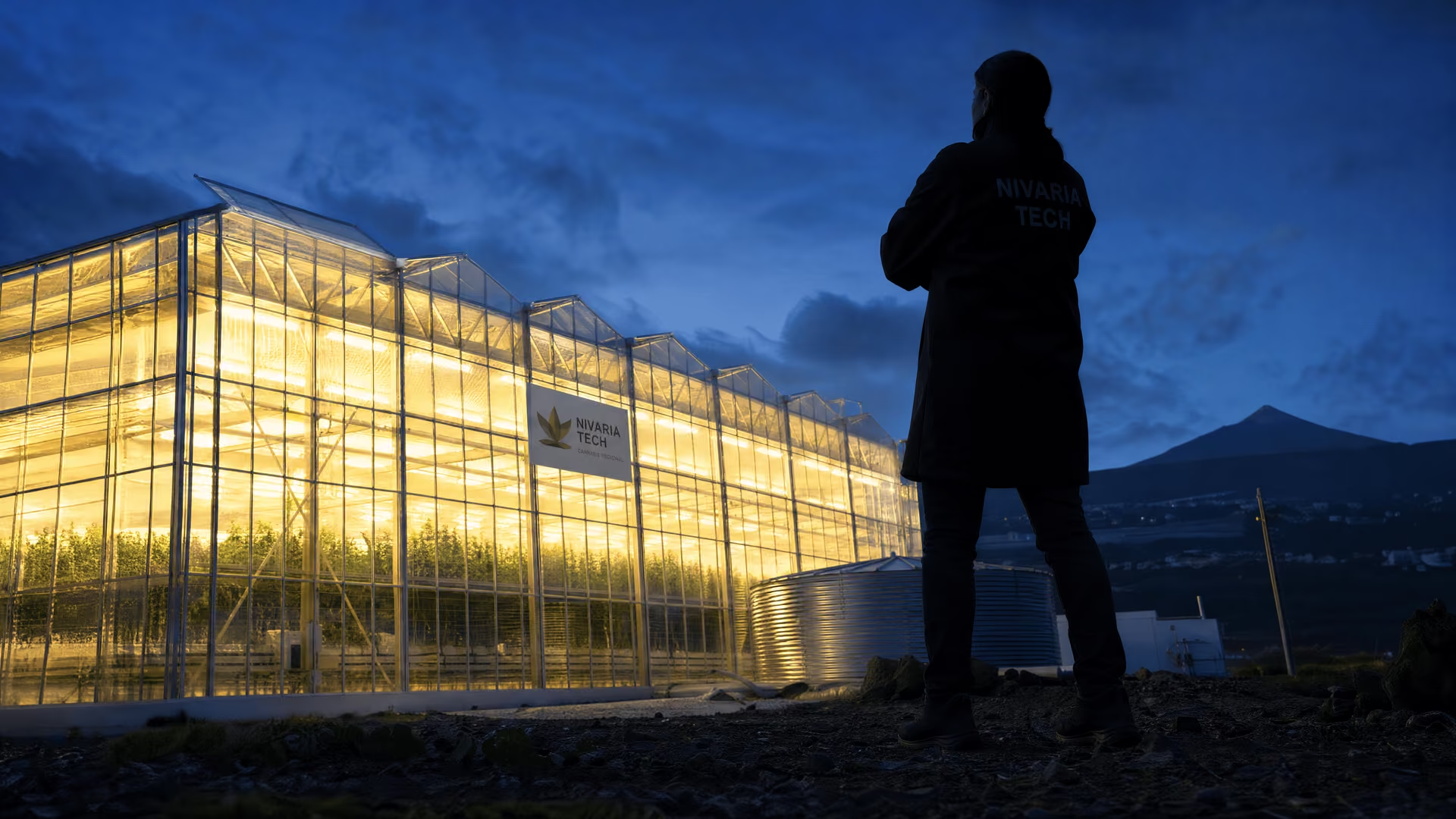
The authorisation marks the archipelago’s formal entry into medical cannabis production under Spain’s pharmaceutical regulatory system. The project is being developed by Nivaria Tech on Tenerife, where the company says cultivation, post-harvest processing and pharmaceutical manufacturing will operate within the same complex.
The development was reported by Newsweed on 20 July 2026. Its report on the first authorised medical cannabis cultivation in the Canary Islands identifies the Spanish Agency for Medicines and Medical Devices, known as AEMPS, as the authority that approved the project.
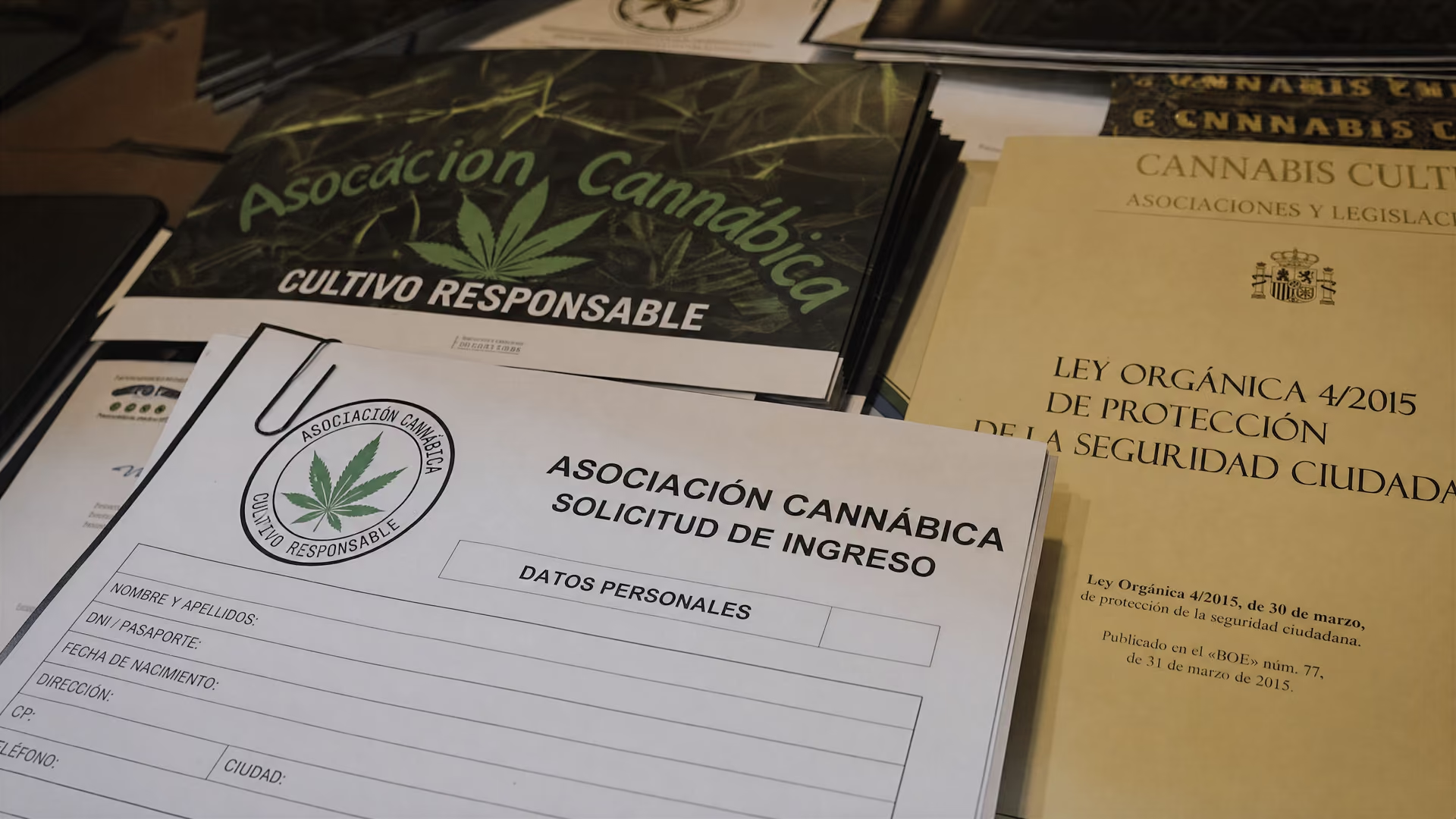
For readers in Gran Canaria, the location matters: this is a Tenerife-based pharmaceutical project, not a new facility in Gran Canaria. It should also be kept separate from Spain’s private, members-only, non-profit cannabis social-club associations. Those associations are not shops or dispensaries and are not open to the public or to tourists; the source material reports no connection between them and Nivaria Tech’s authorised cultivation.
The central scene described by the report is a secure agricultural and pharmaceutical site on former agricultural land in Tenerife:
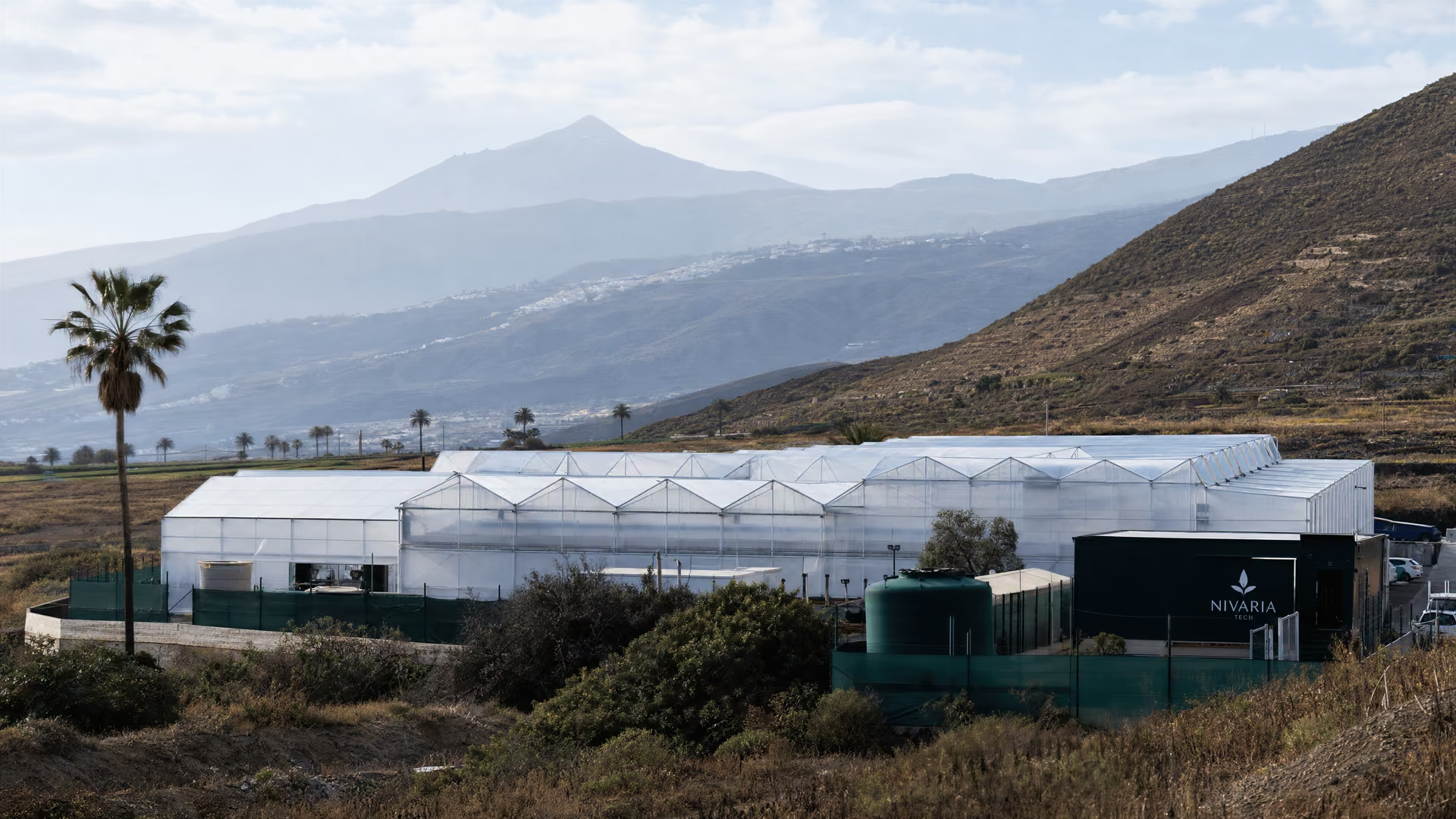
The available reporting presents the authorisation as a starting point for regulated production rather than evidence that medicines are already being supplied to patients. It does not specify production volumes, products, patient distribution arrangements, investment totals or employment figures.
The clearest figures attached to the project are:
What the authorisation covers
Nivaria Tech’s project is presented as an integrated pharmaceutical operation. Rather than describing cultivation as an isolated agricultural activity, the source places it alongside drying, post-harvest processing, quality control and the manufacture of pharmaceutical products.
A pharmaceutical project, not a social club
That distinction is important in the Canary Islands, where discussion of cannabis can involve very different legal and institutional settings. The AEMPS approval concerns a company seeking to produce pharmaceutical material under European manufacturing standards. It is not a retail opening, a dispensary announcement or a change to the membership rules of private cannabis associations.
The reports describe the project’s stated operating model as follows:
- Cultivation in Tenerife on former agricultural land.
- Post-harvest processing within the same complex.
- Pharmaceutical manufacturing integrated into the site.
- Production designed around European Good Manufacturing Practices.
- Plant-by-plant traceability from cloning through laboratory analysis.
- Security and contamination-control systems intended to meet pharmaceutical requirements.
The company’s stated aim is to build a production chain in which the agricultural stage and the pharmaceutical stage can be controlled together. That structure is also described in coverage of the authorised Tenerife medicinal-cannabis crop, which reports the project’s combined cultivation, processing and manufacturing approach.
The project’s reported components
| Element | What the reports describe | Source |
|---|---|---|
| Regulatory approval | The first medical cannabis cultivation in the Canary Islands authorised by Spain’s AEMPS | Newsweed: First authorised medical cannabis cultivation in the Canary Islands |
| Site model | Cultivation, post-harvest processing and pharmaceutical manufacturing in one complex | Canarian Weekly: First authorised medicinal cannabis crop approved in Tenerife |
| Production cycle | Up to six harvests a year through crop rotations of 60 days, according to the company | Newsweed: First authorised medical cannabis cultivation in the Canary Islands |
| Digital controls | Software intended to track each plant from cloning to cultivation, packaging and laboratory analysis | MMJDaily: High-tech agroindustrial model in the Canary Islands |
| Contamination control | Hydrogen-peroxide generators and a cold-treatment process described as cryopasteurisation | Newsweed: First authorised medical cannabis cultivation in the Canary Islands |
Tenerife’s climate is central to the production plan
Nivaria Tech is basing part of its model on Tenerife’s environmental conditions. Valeriano Rodríguez, the company’s plant director, says the local climate can provide natural light cycles that are difficult to reproduce in other production settings.
The company contrasts its approach with producers that rely on artificial lighting. Rodríguez says Nivaria Tech intends to develop its active ingredients under sunlight, arguing that the plants’ existing chemotypes may express themselves differently under natural solar stress than under artificial illumination.
We are going to develop our active ingredients through sunlight rather than artificial lighting.
Valeriano Rodríguez, Nivaria Tech plant director, as quoted in Newsweed
The conditions cited in the report include consistent sunshine, trade winds and limited temperature variation. Together, the company says, these factors make outdoor cultivation particularly suitable for the project. The claim is presented as a production rationale from Nivaria Tech, rather than as an independent assessment by AEMPS or another public authority.
Nivaria Tech expects those conditions to support a fast production cycle. The company’s plan calls for crop rotations every 60 days, which it says could make six harvests a year possible. The figure is a stated operational objective; the supplied reports do not provide performance results from completed harvests.
This is where the project’s agricultural setting intersects with its pharmaceutical ambitions. The climate is being treated as a production input, but the resulting material would still have to pass through processing, testing and manufacturing controls. Natural sunlight does not replace the regulatory requirements attached to the pharmaceutical side of the operation.
A second account of the project describes this combination of climate and industrial planning as a high-tech agroindustrial model, while also attributing the expected harvest frequency to Nivaria Tech’s own projections: the industry report on the Canary Islands cultivation model.
Traceability and contamination control sit at the centre
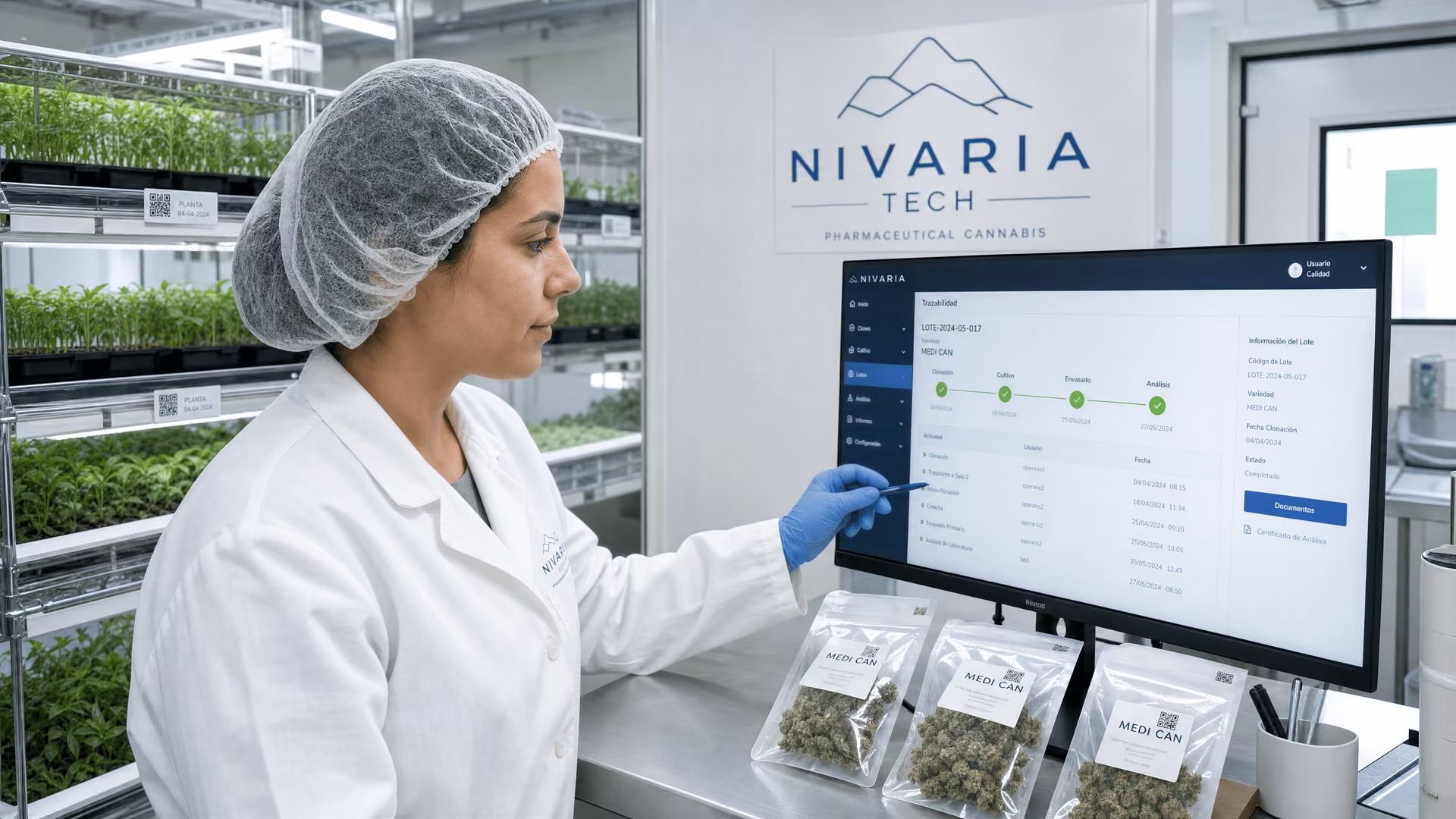
The project’s most detailed technical feature is its emphasis on traceability. Nivaria Tech says it has developed and patented software capable of following each plant through the production chain, beginning with cloning and continuing through cultivation, harvest, packaging and laboratory analysis.
For a pharmaceutical producer, that chain is intended to make the origin and handling of material visible at every stage. The reports do not provide an external audit of the software, but they identify it as one of the systems Nivaria Tech has built into the Tenerife facility to support the company’s compliance strategy.
The site is also described as having several layers of contamination control:
- Generators using hydrogen peroxide as part of the contamination-control system.
- A cryopasteurisation technology designed to remove bacterial contamination through cold treatment.
- Laboratory analysis as a tracked stage in the production chain.
- Processing and pharmaceutical manufacturing located within the same integrated complex.
According to the company, only three machines of the cryopasteurisation type are currently operating across Europe. That claim is one of the project’s distinctive technical points, although the source material does not identify the other facilities or provide an independent verification of the number.
The facility’s security arrangements are similarly described in pharmaceutical terms. The report refers to continuous surveillance, armed security staff, reinforced infrastructure and a bunker for storing pharmaceutical material. These measures are presented as necessary for compliance with European pharmaceutical regulations, not as features of an ordinary agricultural site.
A visual representation of the project’s control chain would centre on the laboratory and its records:
A proposed industrial precedent for the islands
Nivaria Tech is presenting the authorisation as more than a single cultivation project. The company believes the facility could help form a wider pharmaceutical manufacturing ecosystem in the Canary Islands, a region it describes as importing medicines while having limited local production capacity.
That wider ambition remains a company projection, not a confirmed regional programme. The available reporting does not announce additional authorised producers, a public funding package, a new manufacturing cluster or a timetable for expansion.
Rodríguez argues that clearer rules and stronger institutional support could encourage other pharmaceutical manufacturers to establish operations in the archipelago. He specifically calls for cooperation involving Spain’s Ministry of Health and the state, including a possible AEMPS delegation and an inspection service for manufacturers in the islands.
The regional-industry argument is also reflected in coverage of Nivaria Tech’s plans for a new pharmaceutical industry, which presents the Tenerife project as a possible precedent beyond cannabis itself.
The company’s stated position is that the project could demonstrate how the Canary Islands might combine local agricultural conditions with pharmaceutical controls, renewable-energy ambitions, circular-economy principles and domestic manufacturing. Those are declared objectives; the source material does not establish how far they have already been implemented.
What the Tenerife approval does and does not establish
The announcement is significant because it identifies a first authorised medical cannabis cultivation in the Canary Islands and names the national Spanish authority responsible for the approval. It is also specific about the location, the company and the planned production structure: Nivaria Tech, Tenerife, integrated cultivation and pharmaceutical manufacturing.
It does not, on the facts supplied, establish that the project has begun commercial production, that medicines are available through Spanish pharmacies, or that patients can obtain access directly from the site. Nor does it alter the private, members-only status of cannabis social clubs in Gran Canaria or elsewhere in Spain. A pharmaceutical authorisation and a social-club membership decision are separate matters.
For local readers, the next questions are therefore practical and institutional: how the project progresses from authorisation to production, how AEMPS oversight operates in the Canary Islands, and whether the proposed inspection and manufacturing infrastructure is created. None of those next steps is confirmed in the source material.
Questions about the authorised cultivation
Where is the first authorised medical cannabis cultivation in the Canary Islands?
The project is being developed by Nivaria Tech in Tenerife. The available reports do not identify a Gran Canaria site.
Which Spanish authority authorised the project?
The approval came from Spain’s Agency for Medicines and Medical Devices, or AEMPS.
Is this a cannabis social club or a public dispensary?
No. The reporting describes a private company’s pharmaceutical cultivation, processing and manufacturing project. It does not describe a shop, dispensary or public-access facility.
How many harvests does Nivaria Tech plan to achieve?
The company says crop rotations of 60 days could allow up to six harvests each year. The reports do not provide completed harvest results.
The Tenerife authorisation gives the Canary Islands a documented foothold in Spain’s regulated medical cannabis and pharmaceutical production sector. Its immediate fact is narrow but important: AEMPS has approved Nivaria Tech’s cultivation project. Whether that becomes a functioning supply chain or a broader industrial precedent will depend on production, inspection and institutional developments that have yet to be reported.