Spain's National Police arrested seven in Gran Canaria, including a Las Palmas local police officer, and seized more than 300 kilos of hashish.

Spain's National Police arrested seven people in Gran Canaria on 15 July 2026, including a Las Palmas de Gran Canaria Local Police officer, and seized more than 300 kilograms of hashish in a year-long drug-trafficking investigation, according to the Europa Press report on Operation Tijuana. The operation also uncovered cocaine, firearms, cash, vehicles, a boat and mobile devices during searches across three municipalities.
Seven arrests after a year-long investigation in Gran Canaria
The operation, named Operation Tijuana, was carried out by the National Police's UDYCO Central and UDYCO Las Palmas units. Police said the investigation ran for one year and was intended to document an alleged criminal organisation with a structured system for moving and distributing drugs through the Canary Islands.
The seven detainees include a member of the Las Palmas de Gran Canaria Local Police. The police account does not identify the officer, state the officer's alleged function in the network or describe any specific conduct attributed to that individual. Those details remain separate from the broader allegations made against the group.
The reported scale of the operation can be summarised in four figures:
The operation's physical focus included a rented vehicle used in the alleged distribution activity and several properties and commercial premises searched by investigators:
Operation Tijuana traced an alleged island distribution network
According to the National Police, the investigation centred on a person known as Juke, whom officers had investigated for years because of an alleged ability to introduce and distribute substantial quantities of hashish and cocaine in the Canary Islands. Police said the inquiry documented the group's logistics for transporting and distributing drugs between different islands.
The police also reported alleged links between Juke and El Buque, whom the authorities described as one of the major drug traffickers in the Canary Islands and who is currently in prison in connection with Operation Lazos de Sangre. Investigators further reported links with people belonging to the Balkan Cartel. These claims are presented by the police as part of the investigation and will remain subject to judicial examination.
The investigation documented alleged transport and distribution logistics between different islands of the archipelago.
National Police account reported by Europa Press
The account supplied by investigators describes four principal elements of the alleged network:
- A suspected leadership role attributed by police to the person known as Juke.
- A history of police interest in Juke's alleged ability to move hashish and cocaine into and around the Canary Islands.
- Reported links with El Buque and with people associated, according to police, with the Balkan Cartel.
- A logistical system for transporting and distributing drugs between islands, including the use of a rented van intended to make detection more difficult.
The description of an organised network does not itself establish criminal responsibility for each detainee. The National Police investigation and the subsequent judicial process must determine what evidence connects each person to the alleged activity.
Six searches produced a broad evidence haul
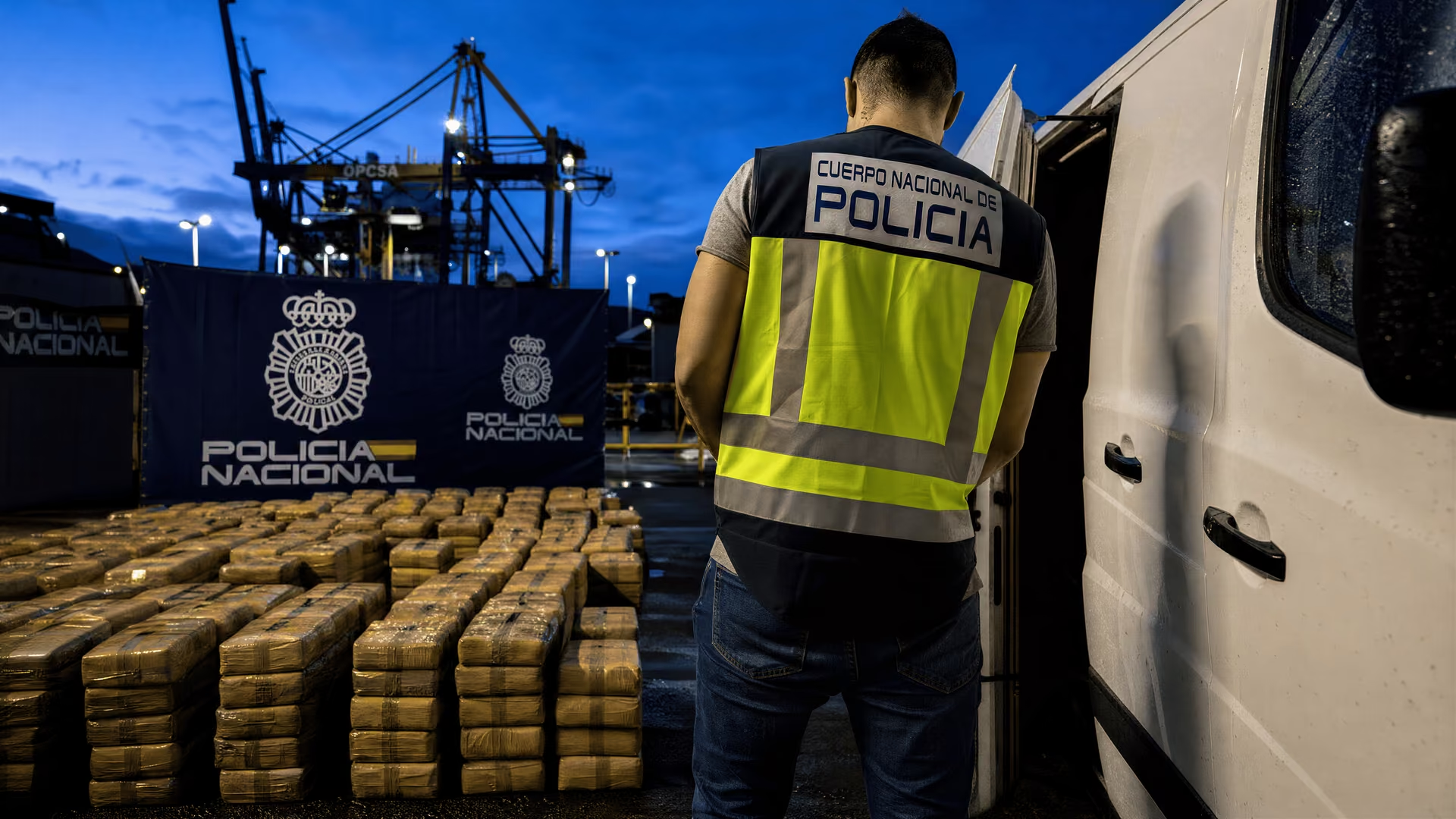
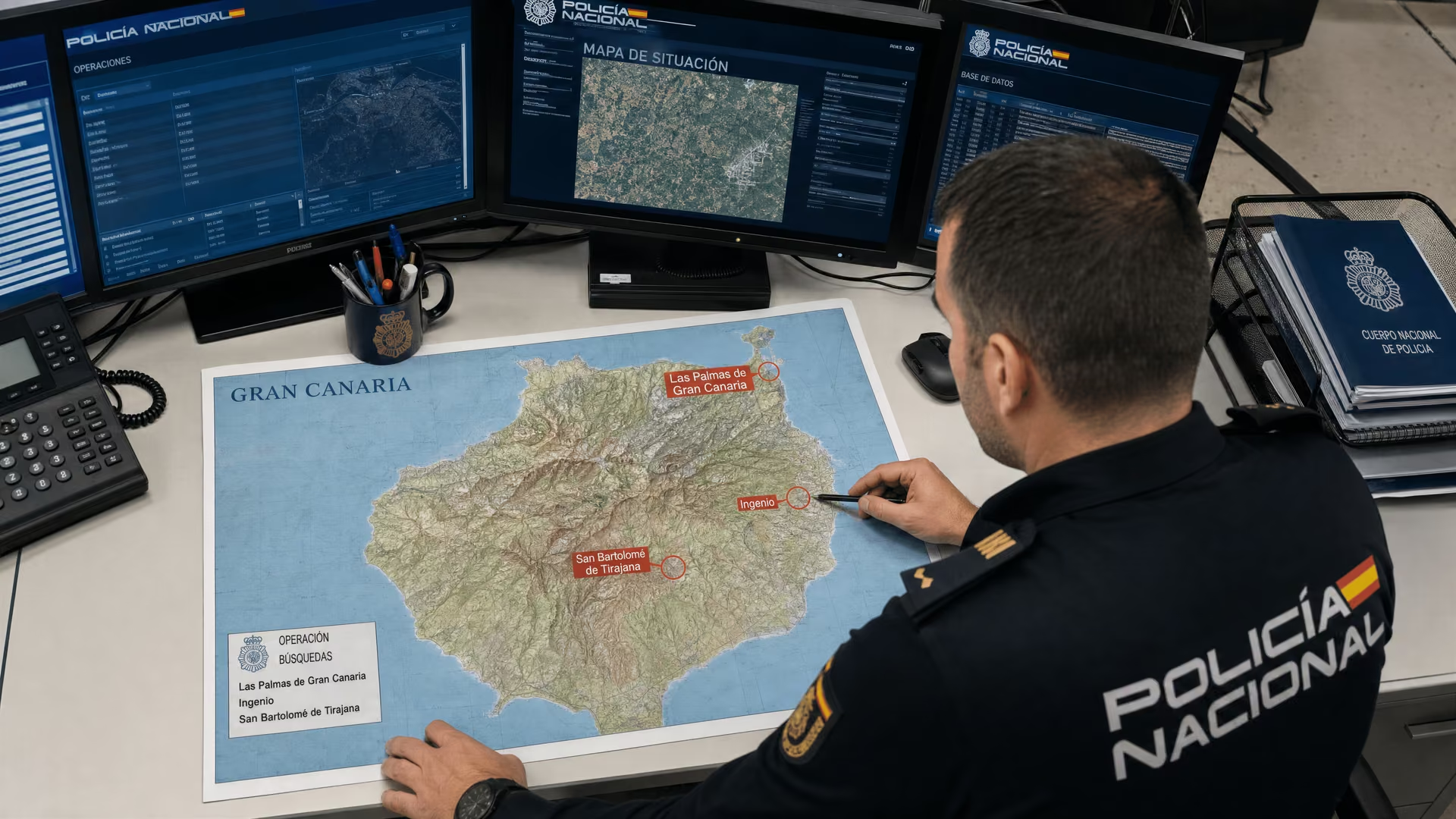
The operational phase began after police detected what they described as one of the organisation's distribution operations. Investigators said the people involved were transporting more than 300 kilograms of hashish in a rented van. That intervention was followed by six judicially authorised searches in Las Palmas de Gran Canaria, Ingenio and San Bartolomé de Tirajana.
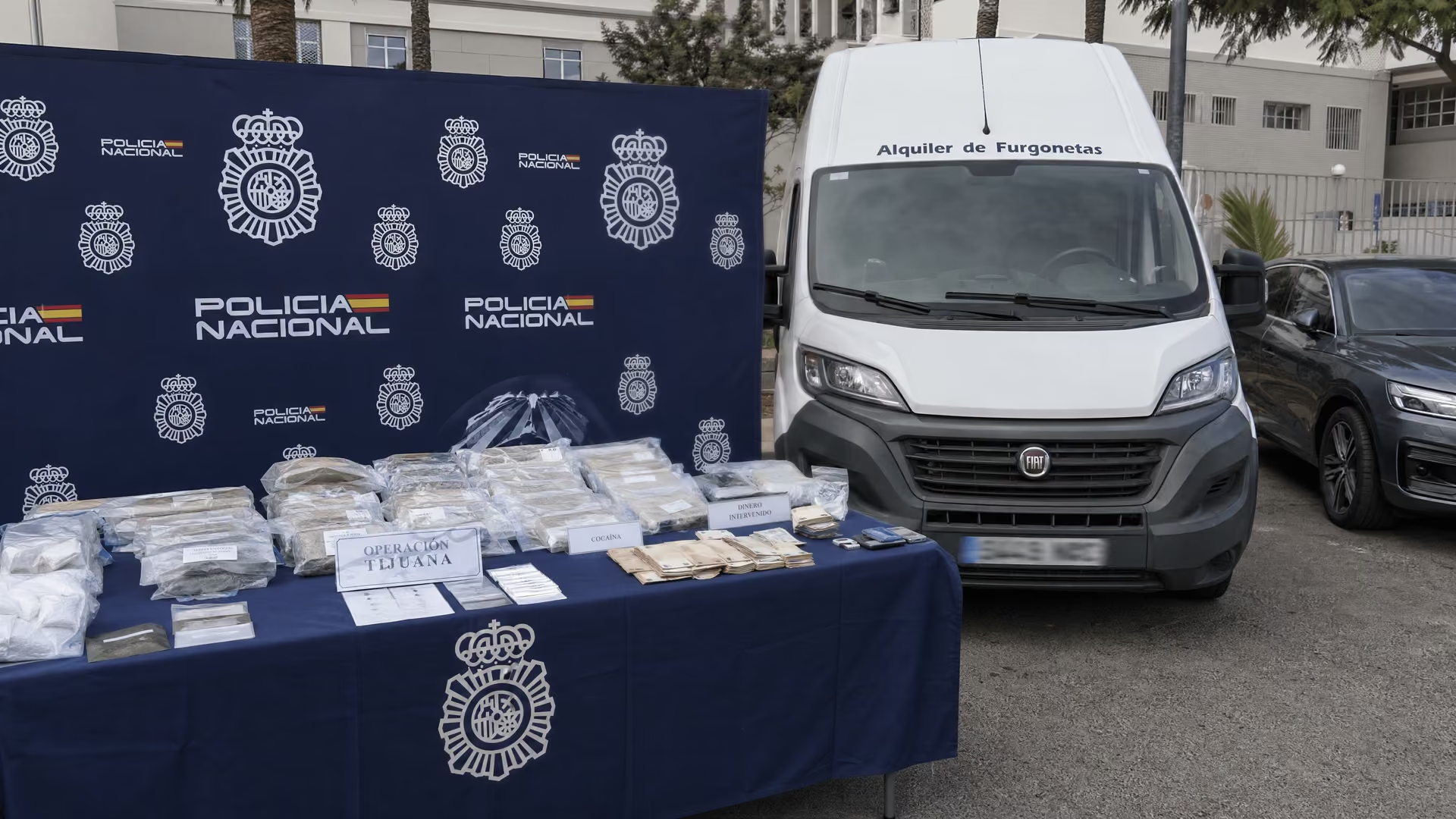
Police said the searches dismantled the infrastructure allegedly used to store and distribute controlled substances. The reported seizures were:
| Category | Reported detail | Source |
|---|---|---|
| Searches | Six entries and searches in Las Palmas de Gran Canaria, Ingenio and San Bartolomé de Tirajana | Europa Press report on Operation Tijuana |
| Controlled substances | More than 300 kilograms of hashish and two kilograms of cocaine | Europa Press report on Operation Tijuana |
| Other evidence | Two short firearms, 55,000 euros in cash, eight vehicles, one semirigid boat, twelve mobile devices and related documents | Europa Press report on Operation Tijuana |
The evidence list extends beyond the alleged drugs themselves. The firearms, cash, transport assets, communications devices and documentation will form part of the material examined as the investigation continues. The police report does not state what specific evidential role is attributed to each item.
The geography of the searches shows the operation's reach across the island:
The police officer's arrest raises a separate accountability question
The detention of a Las Palmas de Gran Canaria Local Police officer gives the case an institutional dimension, but the available account provides no details about the officer's alleged role. It would be inaccurate to treat the arrest alone as proof of involvement, and the report does not announce a conviction or a final judicial finding.
That distinction is particularly important in a case involving a serving public official. The police announcement describes an investigation into an alleged criminal organisation and lists seven arrests; it does not set out the evidence against each person individually. The legal position of every detainee therefore remains to be determined by the competent judicial authority.
The procedural position described in the police account is:
- The National Police completes its investigative proceedings concerning the arrests and the seized material.
- The seven detainees are placed at the disposal of the competent judicial authority.
- Investigators analyse the evidence, with further police action not ruled out if new developments emerge.
The arrests do not establish a link to private cannabis social clubs
For readers following Gran Canaria's cannabis policy, the operation should not be conflated with the island's private social-club framework. The Europa Press account describes an alleged drug-trafficking organisation and does not say that a cannabis social club or association was involved. No connection should be inferred from the fact that hashish was among the seized material.
Under Spain's legal and social framework, cannabis social clubs are private, members-only, non-profit associations. They are not shops, dispensaries or venues open to the public, and they are not automatically accessible to tourists or to anyone visiting Gran Canaria. Membership is a private legal matter decided by each association.
That separation matters for local reporting. A criminal investigation into alleged trafficking cannot be used to describe the status of every cannabis-related association, just as the existence of private associations does not alter the allegations made in this National Police operation.
The investigation remains open after the arrests
The National Police said the investigation remains open under the direction of the competent judicial authority. Officers have not ruled out further action arising from the analysis of the evidence recovered during the searches.
For now, the confirmed development is the arrest of seven people and the seizure of the material listed in the operation report. The next formal step is the detainees' appearance before the judicial authority once the police proceedings are complete. Any later decision about charges, custody or other measures would need to come from that process rather than from the arrest announcement itself.
Operation Tijuana has produced a major set of arrests and seizures in Gran Canaria, but the final legal assessment remains pending. The alleged network, the role of the detained Local Police officer and any further consequences will be determined through the continuing investigation and Spain's judicial process.
Sources
- Reducir daños del basuco exige enfrentar también la violencia (canamo.net)
- Irlanda busca destrabar el cáñamo industrial tras cultivar solo 11 hectáreas (canamo.net)
- El mercado del plátano en la Península, aún más hundido: los agricultores ya solo reciben 0,36 euros/kilo (eldiario.es)
- 'Canarias: 50 años tras la oscuridad': La Reparación (eldiario.es)
- Canarias registra un 30% de muertes por ahogamientos en 2026 (abc.es)
- La Universidad de La Laguna detecta acumulación de radón en varios de sus edificios (abc.es)
- Cae una red de narcotraficantes en Gran Canaria con siete detenidos, entre ellos un policía local (efe.com)
- Un inspector de la Policía Local de Las Palmas de Gran Canaria entre los detenidos de una red de narcotraficantes (cadenaser.com)
- Detenido un inspector de la Policía Local de Las Palmas de Gran Canaria por tráfico de drogas (canariasred.com)
- Police officer arrested over drug trafficking in Gran Canaria (canarianweekly.com)